Asus ProArt P16 H7607: Nvidia’s ARM SoC Meets a 4K OLED Canvas
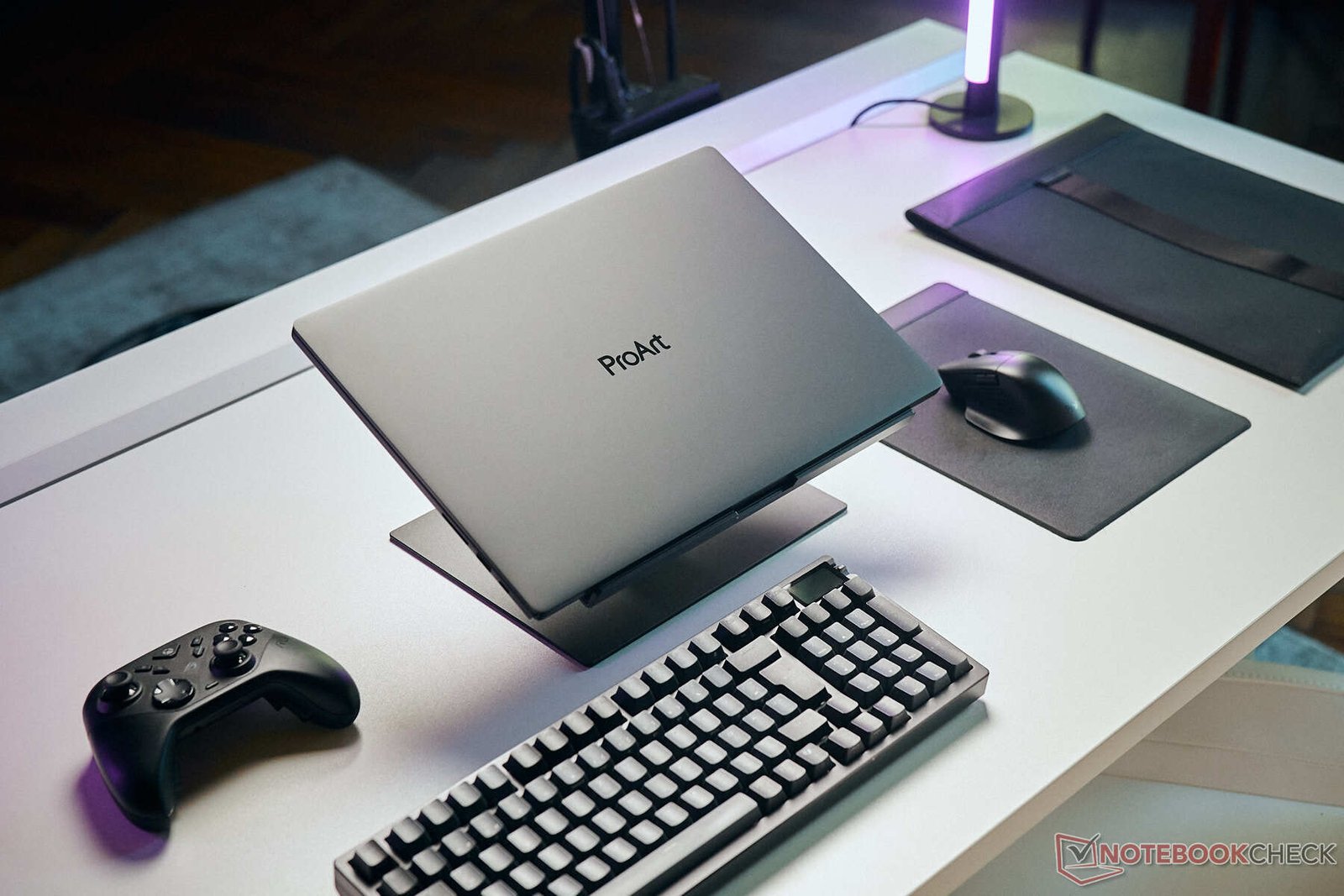
The Asus ProArt P16 H7607 arrives as one of the first laptops built around Nvidia’s RTX Spark N1X system-on-chip, and Notebookcheck’s Andreas Osthoff has published an Asus ProArt P16 review that tests whether the new ARM-based platform belongs in a creator machine. The short answer: the hardware is often excellent, the performance is competitive, and the $6,999 asking price for the 128 GB configuration demands careful thought.
A thin chassis that does not feel compromised
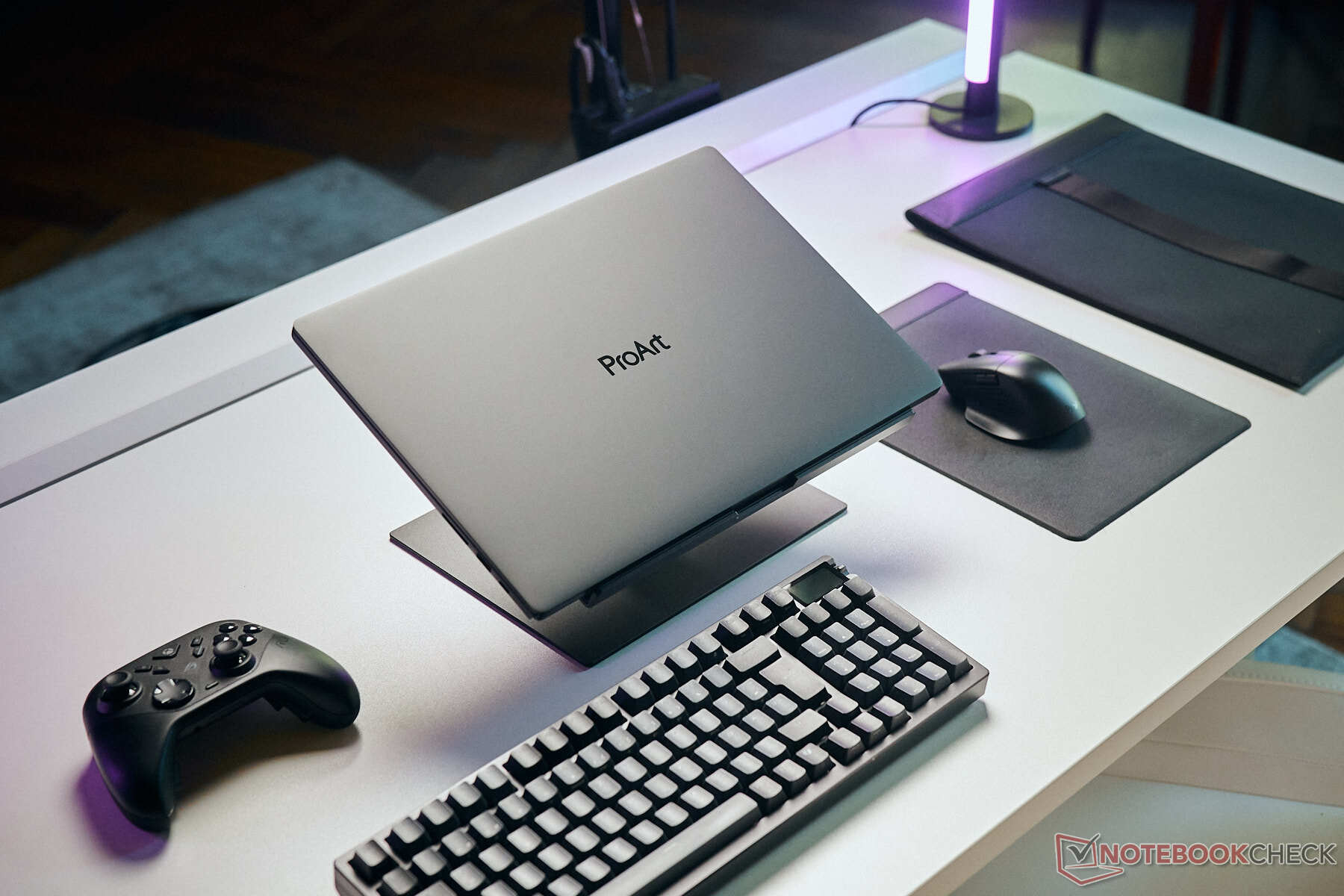
At 13 mm thick and 1.79 kg, the ProArt P16 is remarkably compact for a 16-inch multimedia laptop. Osthoff describes the build as stunning and finds no creaking anywhere in the chassis. He calls it one of the best he has used. The lid opens to 135 degrees, and the machine is offered in black or white.
Input hardware is a strong point. The keyboard is very comfortable, and the large haptic touchpad works well. One change from earlier ProArt P16 models is the removal of the dial-pad, so the touchpad area is now a conventional surface. The six-speaker Dolby Atmos system is rated excellent, reaching 87 dB with linear overall sound.
Display quality and the touchscreen trade-off
The 16-inch 4K tandem OLED touchscreen runs at 3840 x 2400 and 120 Hz. Brightness is high: 728 nits maximum in SDR and 1644 nits peak in HDR. Color accuracy is very good across sRGB, P3 and AdobeRGB. The touchscreen layer introduces slight graininess on bright content, which is the main visual compromise.
PWM frequency has improved to 960 Hz over the previous model, a meaningful change for sensitive users. The 2025 ProArt P16 also used a 4K tandem OLED panel, but combined it with AMD Ryzen AI and Nvidia RTX graphics. The 2026 model replaces that arrangement with the N1X SoC.
RTX Spark N1X: a balanced package
The N1X combines a 20-core ARM CPU built on a 3 nm process with a Blackwell GPU. The CPU has 10 performance and 10 efficiency cores; the GPU has 6144 cores, with 64 GB of VRAM allocated on the review unit’s 128 GB of memory. Osthoff characterizes the chip as a good overall package rather than outstanding in any single area.
CPU results beat the Intel Core Ultra 9 285H, Core Ultra 7 356H, Ryzen AI 9 HX 370 and Ryzen AI Max+ 395. Apple’s M5 Pro and M5 Max are significantly faster. GPU performance roughly matches a mobile RTX 5070. Performance modes scale predictably: Whisper mode runs at 50/35 W TDP with 1529 CB24 multi and 43.2 fps in Cyberpunk; Standard mode at 60/45 W reaches 1604 CB24 and 48.4 fps; Performance mode at 85/70 W reaches 1726 CB24 and 56.8 fps. Battery performance mode at 80/70 W delivers 1706 CB24 and 56.2 fps, so full performance is available on battery.
Gaming, connectivity and maintenance
Most tested games worked, with DLSS and Frame Generation supported. Some titles fail to launch because of ARM compatibility issues, and the same caveat applies to some Windows applications. No stability issues were encountered with the new SoC, and there is no delay when the discrete GPU activates, unlike Advanced Optimus.
Ports include three USB-C 4.0, USB-A, HDMI and an SD-Express reader, which achieves 474 MB/s in JPG copy and 714 MB/s sequential read. Wi-Fi 7 delivers stable transfers at 2236 Mbit/s transmit and 2021 Mbit/s receive. Inside, two M.2-2280 slots accommodate SSDs; the review unit carries a 2 TB SanDisk PCIe 4.0 drive even though the laptop supports PCIe 5.0. RAM is soldered and cannot be upgraded. The 1080p webcam lacks a privacy shutter. SSDs, the Wi-Fi module, fans and battery remain accessible for maintenance.
Battery, thermals and the price question
Battery runtime is about 9.5 hours in the Wi-Fi test at 150 nits, dropping to roughly 4.9 hours at maximum brightness. Maximum power consumption is 146.8 W, and the included 140 W PSU is sufficient. Under load, fan noise reaches 51.1 dB(A), quieter than the previous model, while bottom surface temperatures peak at 48.6°C.
At $6,999 for 128 GB of RAM, the ProArt P16 competes with the Apple MacBook Pro 16, Lenovo Yoga Pro 9i and Samsung Galaxy Book6 Ultra. A three-year international warranty is included. Notebookcheck awards the laptop a 90% rating, very good. The criticisms are specific: soldered RAM, a 1080p webcam and a PCIe 4.0 SSD in a machine at this price. For creators willing to accept ARM Windows compatibility limits, the combination of display, build and balanced N1X performance makes a persuasive case.












1 comment