HP OmniBook 3 16 Review: A $650 Snapdragon Laptop That Trades Speed for Stamina
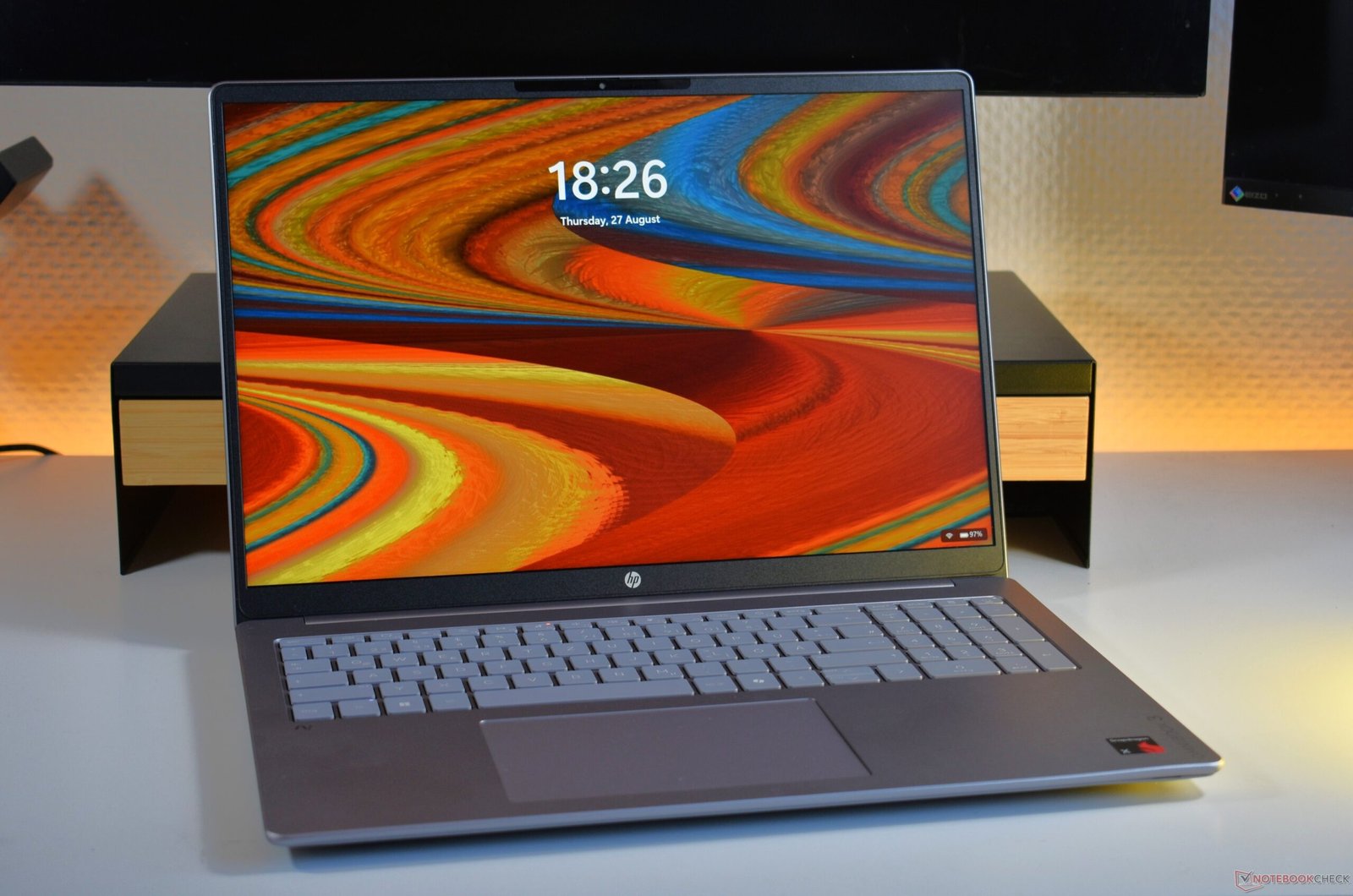
In a market where inexpensive laptops are getting harder to find, the HP OmniBook 3 16 arrives at roughly $650 in the United States. This HP OmniBook 3 16 review, written by Benjamin Herzig for Notebookcheck, examines what buyers actually receive for that money: a 16-inch machine built around Qualcomm’s ARM-based Snapdragon X X1-26-100 processor, with 16 GB of soldered LPDDR5X-8448 memory and a 512 GB Longsys Foresee XP2350 SSD.
What the $650 buys
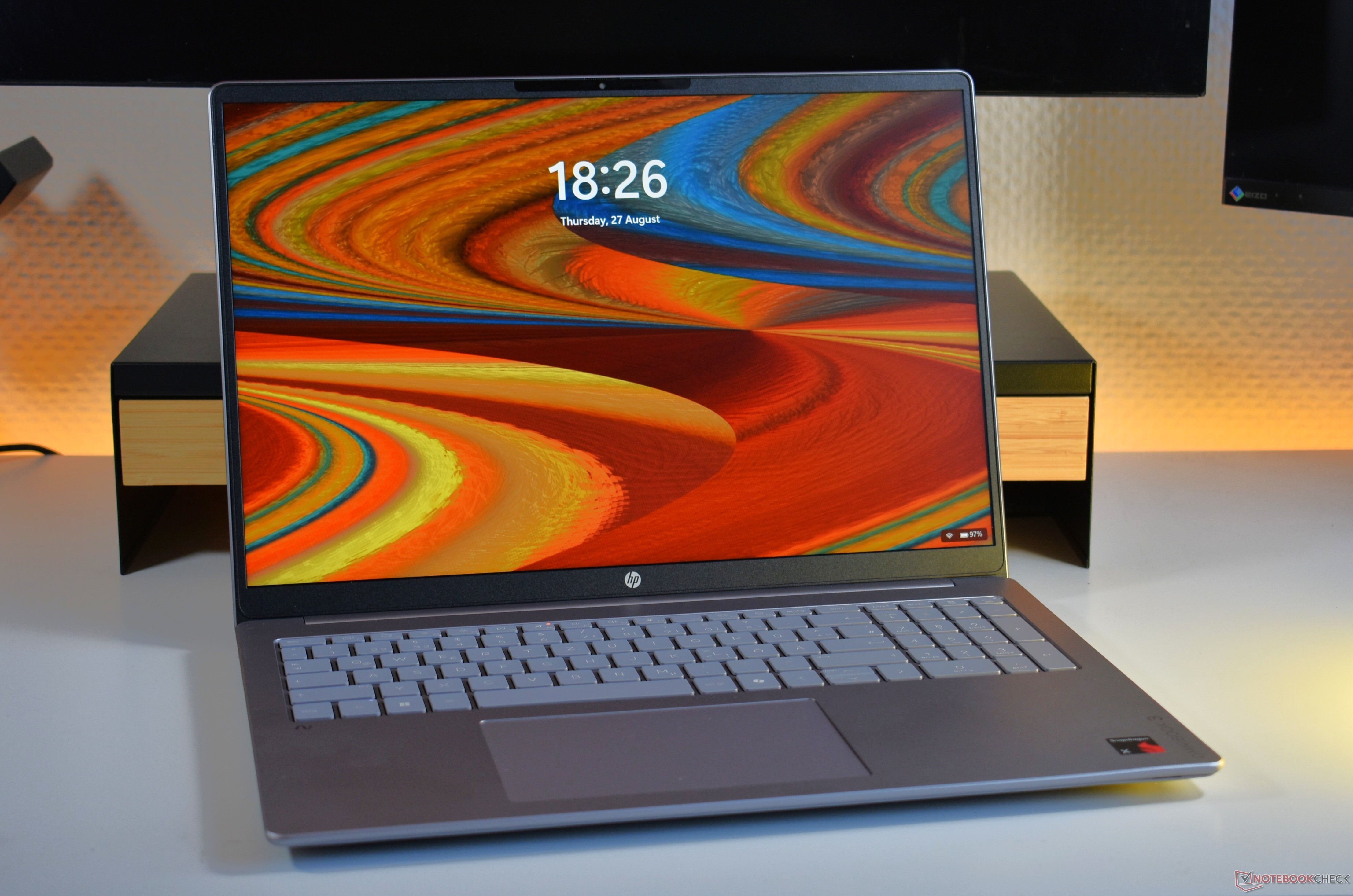
The core hardware is modest but coherent. The Snapdragon X X1-26-100 has eight cores running up to 3.0 GHz, with power limits of 45 W (PL2) and 37 W (PL1). Notebookcheck tested a unit supplied by HP Deutschland and states that the lender had no influence on the review and that the manufacturer did not see the article before publication.
The chassis mixes plastic with an aluminum display cover. At 1.767 kg and 20.5 mm thick, the 16-incher is portable enough for desk-to-desk travel, though the body can twist and the screen wobbles slightly. The palmrest holds up well to pressure, and keyboard flex stays limited. One-handed opening works, with the lid traveling to about 130 degrees.
Display and input: where the savings show
The 16.0-inch IPS panel runs at 1920×1200 and 60 Hz with a matte finish. Average brightness measured 328 cd/m², peaking at 345 cd/m², and contrast came in at 1053:1. Color is the weak point: roughly 63.3% sRGB coverage and low accuracy make the screen a poor fit for or video work. Notebookcheck did not detect PWM flicker, which is good news for sensitive users.
The full-size keyboard includes a numeric keypad, but there is no backlight, and the gray keys carry white lettering. The touchpad is a mechanical clickpad with a plastic surface, measuring 13.5 x 8.5 cm.
Ports, wireless and security
Connectivity covers the basics: two USB-A 3.2 Gen 1 ports, two USB-C 3.2 Gen 2 ports, HDMI and a 3.5 mm audio jack. There is no SD card slot, and the USB-C ports lack Thunderbolt 4 or USB4 speed. Wireless tops out at Wi-Fi 6E and Bluetooth 5.3, so Wi-Fi 7 is absent. A fingerprint reader and a 1080p webcam with IR and a privacy shutter round out the feature set.
Performance: fine for office, weak for games
For everyday office work, the CPU is adequate, and native Cinebench 2026 multicore results beat the Lenovo IdeaPad Slim 3. Single-core performance trails some rivals, and emulation limits the chip’s potential. The Adreno X1-45 GPU is rated at 1.7 TFLOPS, which means only older or simple games are playable.
Upgrade options are narrow. Memory is soldered, leaving only the M.2 2280 SSD replaceable; the bottom cover is held by four Phillips screws and clips.
Battery, noise and heat
Battery life is the standout. The 68 Wh pack lasted 18 hours 35 minutes in the Wi-Fi web-surfing test. The laptop also runs cool and quiet: fan noise peaked at 38.8 dB(A), top and bottom temperatures reached 39.4 °C and 39.6 °C, and no coil whine was detected. The CPU is not throttled in battery mode. Maximum load power consumption was 69.7 W.
One practical catch: no charger is included in the box. Notebookcheck tested with a 65 W USB-C charger and notes that a higher-wattage unit may be advisable.
Verdict
Notebookcheck awarded the OmniBook 3 16 an overall rating of 82%, or good. The machine makes sense for budget office users who value a large screen, long battery life and quiet operation over color accuracy, graphics power and future-proof connectivity. Buyers should also budget for a charger and accept that RAM cannot be upgraded.









1 comment