Apple Watch Ultra 1 vs Ultra 4: Four Years On, Should You Upgrade?

Four years after the first Apple Watch Ultra reached wrists, Apple has introduced the Apple Watch Ultra 4. The original Ultra was discontinued in 2023, and its inability to run watchOS 27 is the clearest dividing line in the Apple Watch Ultra 1 vs Ultra 4 comparison. Priced from $799 in the United States, the Ultra 4 keeps the familiar 49mm titanium case, Action button, siren, dual-frequency GPS and 40-meter dive rating — then adds a long list of upgrades.
Display and design: bigger, brighter, more flexible
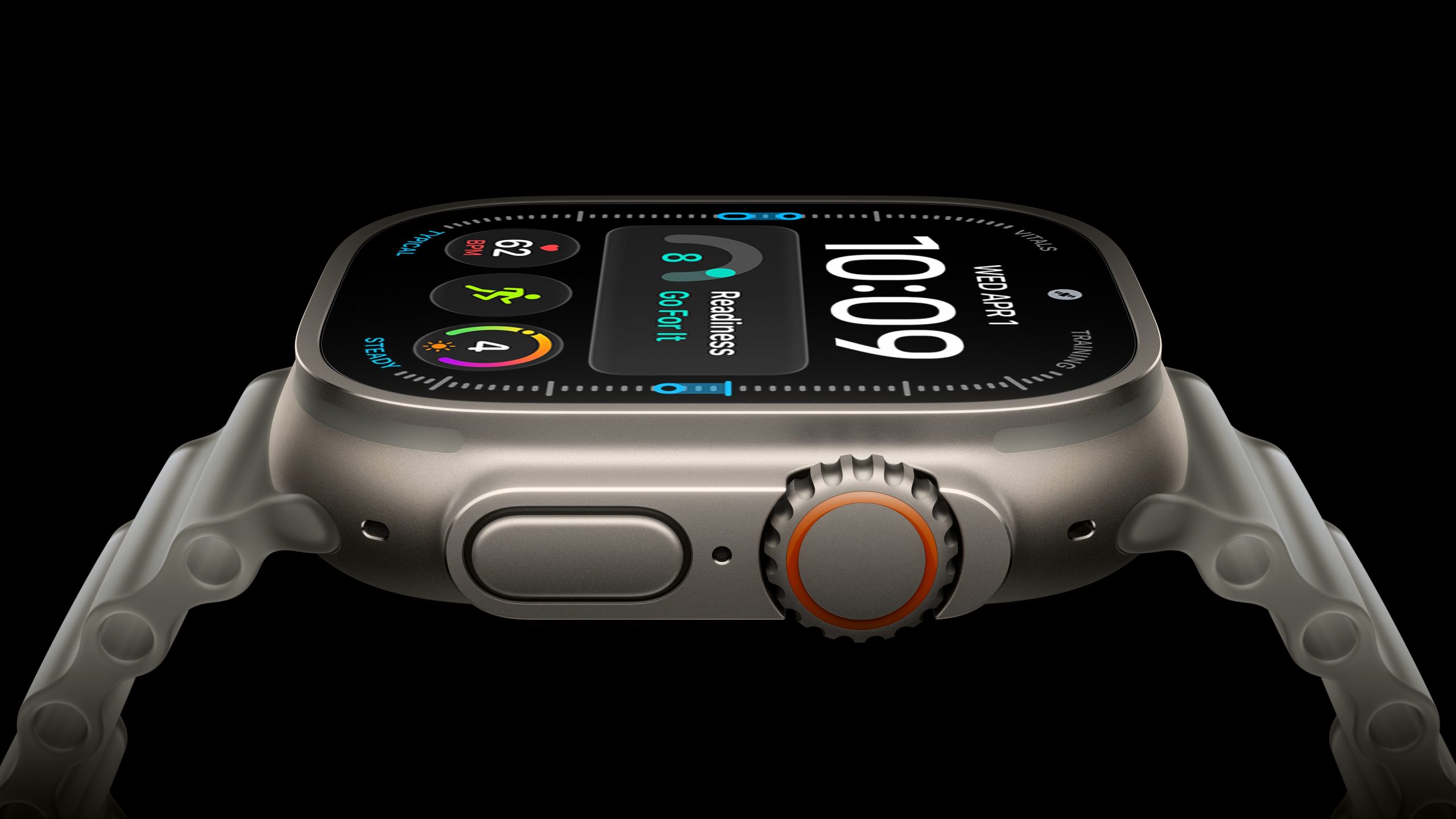
The most visible change is the screen. The Ultra 4 uses a wide-angle LTPO3 OLED panel with 1Hz always-on refresh, while the original Ultra relies on LTPO2 OLED that updates once per minute. Brightness climbs from a 2,000-nit peak on the original to 3,000 nits on the Ultra 4, with a minimum of 1 nit. Display area grows to 1,245 square millimeters — about 5% larger — and resolution rises to 422 by 514 pixels, compared with 410 by 502 pixels on the first Ultra.
Apple also offers the Ultra 4 in natural and black titanium finishes; the original came only in natural titanium. The new model includes a flashlight boost controlled through the Digital Crown. Weight edges up slightly, from 61.3 grams on the original to 63.0 grams in natural titanium and 63.1 grams in black titanium.
Chip, memory and storage
Inside, the Ultra 4 moves to the S11 chip with a 4-core Neural Engine and Secure Exclave, paired with 4GB of RAM and 64GB of storage. The original Ultra carries the S8 chip with 1GB of RAM and 32GB of storage. That hardware gap underpins several new capabilities, including on-device Siri for supported requests, improved on-device dictation, Siri AI, and a second-generation Ultra Wideband chip. The original Ultra processes Siri in the cloud via an internet connection and uses a first-generation Ultra Wideband chip.
Health and fitness gains
Apple’s Health Sensing System on the Ultra 4 introduces new electrical and always-on optical sensors. Background heart rate is measured every five seconds, and overall HRV plus Recovery HRV are tracked more frequently than on the original, which has an electrical heart sensor, a third-generation optical heart sensor and standard HRV measurement. The Ultra 4 adds overnight and daytime Vitals views, a Readiness app, sleep apnea notifications and hypertension notifications. Blood Oxygen readings remain available on the original Ultra’s watch screen, while on affected U.S. models of the Ultra 4 that analysis is handled on a paired iPhone.
Workout tracking gets more accurate all-day steps and indoor distance estimates, plus a Steps complication. Enhanced Workout Buddy offers additional insights and Spanish support, whereas the original’s Workout Buddy needs a nearby Apple Intelligence-enabled iPhone. Live Translation in Messages arrives with a compatible iPhone.
Battery, charging and connectivity
Apple rates the Ultra 4 at up to 50 hours of normal use and 84 hours in Low Power Mode, up from 36 and 72 hours on the original. Standard outdoor workout tracking extends to 18 hours, with Extended Workout mode reaching 25 hours of full GPS and heart-rate tracking and Max Extended Workout mode up to 45 hours with GPS every second. Charging is faster too: 0–80% in about 45 minutes versus roughly an hour, with 15 minutes providing up to 18 hours of normal use and five minutes giving up to 10 hours of sleep tracking.
Cellular support expands to LTE and 5G with improved weak-signal reception, and the Ultra 4 adds Precision Finding for iPhone, AirTag 2 and the AirPods Pro 3 case. Audio Intelligence brings Sound Recognition, music identification, Live Rewind and Siri Recap. Both models share satellite connectivity for Emergency SOS, Messages and Find My.
Should you upgrade?
Owners whose original Ultra still covers a full day and meets their needs can reasonably hold on another year, even though losing watchOS 27 support is significant. The upgrade makes more sense for those hitting battery or performance limits, or who want the larger display, faster charging, expanded health sensing and software longevity of the Ultra 4.








1 comment